


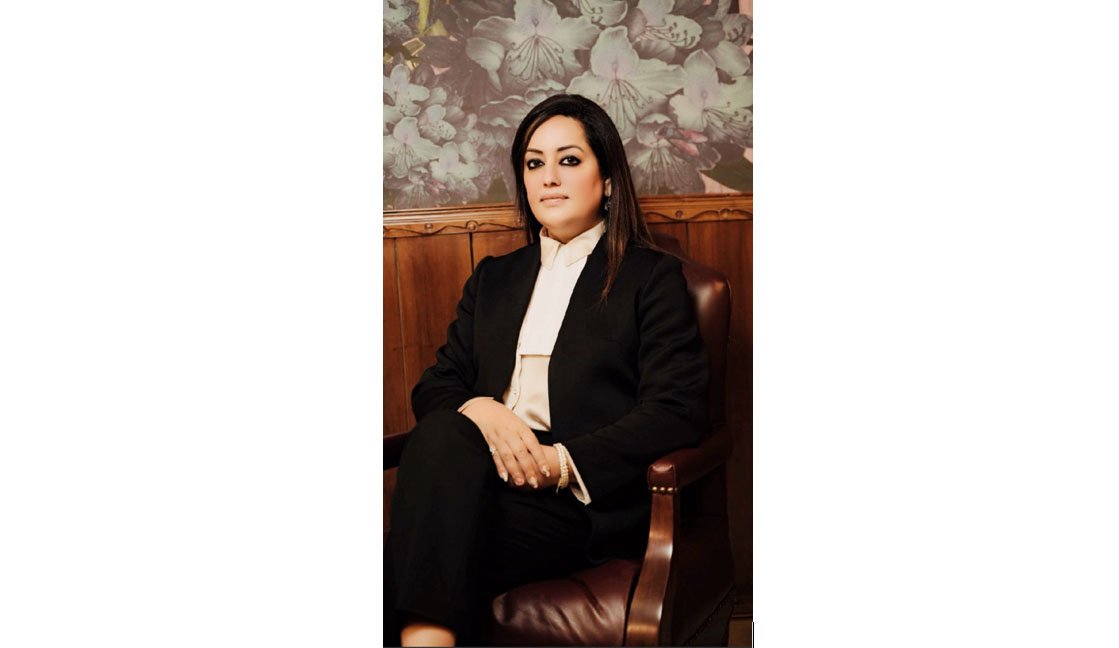
In an exclusive interview with Dr. Harita Mehta, Senior Advocate, High Court & Supreme Court, we explore the evolving landscape of women’s rights and India’s legal framework in addressing contemporary social and institutional challenges.
From gender equality and women’s representation in senior legal positions to workplace discrimination, domestic violence, cyber harassment and access to justice, Dr. Mehta shares her insights on the reforms needed to build a more inclusive, accountable and accessible justice system.


She also highlights the importance of effective law enforcement, institutional reforms and greater representation of women in shaping India’s legal future.
1. Despite growing representation of women in the legal profession, what challenges continue to limit their growth into senior advocacy and leadership positions? What institutional changes are needed to create a more equitable legal environment?
While the representation of women in the legal profession has certainly improved, their journey towards senior advocacy and leadership positions continues to be challenging. The issue is not merely about allowing more women to enter the profession; it is about creating an environment where they can sustain their careers, grow professionally and receive equal opportunities to lead.
Women lawyers often face structural barriers, including limited access to influential professional networks, unequal mentorship opportunities, financial constraints during the initial years of practice and unconscious gender bias in professional spaces. Litigation, in particular, demands long working hours, frequent court appearances and considerable personal commitment. For many women, balancing these demands with family responsibilities becomes an additional challenge. There is also a need to address the underrepresentation of women in senior designations, leadership positions within Bar Associations and decision-making bodies.
Institutional reforms must go beyond symbolic representation. We need transparent and merit-based processes for professional recognition, stronger mentorship programmes, gender-sensitive workplace policies, adequate infrastructure in courts and effective mechanisms to address harassment and discrimination. Most importantly, senior members of the Bar and the judiciary must actively encourage and support women lawyers.
An equitable legal environment is one where professional competence, integrity and merit determine growth, rather than gender. Women’s advancement should be viewed not as a concession but as an essential step towards strengthening the legal profession itself.
2. How has India’s legal framework evolved in protecting women’s rights, particularly in areas such as workplace equality, domestic violence, inheritance and gender-based discrimination? What significant gaps still need to be addressed?
India’s legal framework has made considerable progress in recognising and protecting women’s rights. The Constitution guarantees equality before the law under Article 14, prohibits discrimination on grounds of sex under Article 15 and provides for equality of opportunity under Article 16. Article 15(3) also empowers the State to make special provisions for women and children.
Over the years, several important legislations and judicial developments have strengthened these protections. The Protection of Women from Domestic Violence Act, 2005, provides civil remedies to women facing domestic abuse, including protection orders, residence rights and monetary relief. The Sexual Harassment of Women at Workplace (Prevention, Prohibition and Redressal) Act, 2013, established a framework for preventing and addressing workplace harassment. Similarly, the Hindu Succession (Amendment) Act, 2005, strengthened daughters’ equal coparcenary rights in ancestral property, a position further clarified by the Supreme Court in Vineeta Sharma v. Rakesh Sharma (2020).
Judicial pronouncements have also played a significant role in advancing gender equality, particularly in matters concerning dignity, bodily autonomy, equal opportunity and protection against discrimination.
However, the existence of legislation does not automatically translate into justice. Implementation remains a major concern. Workplace committees are not always adequately functional, domestic violence cases often face delays, and women may encounter social pressure or financial dependence that prevents them from pursuing legal remedies. Property rights, too, are frequently undermined by social practices and family pressure.
The next phase of reform must focus on effective enforcement, time-bound remedies, legal awareness and accountability. Laws must not remain confined to legal documents; they must create tangible improvements in women’s everyday lives.
3. With the rise of digital platforms, women are increasingly vulnerable to cyberstalking, online harassment, identity theft and digital abuse. Are existing laws adequately equipped to address these challenges, and what further legal safeguards are required?
The rapid expansion of digital platforms has created new opportunities for women, but it has also exposed them to increasingly complex forms of harassment and exploitation. Cyberstalking, impersonation, circulation of non-consensual intimate images, online threats, deepfake content and identity theft are serious concerns that require a strong legal and institutional response.
India does have legal provisions to address several of these offences. The Information Technology Act, 2000, particularly Sections 66C, 66E, 67 and 67A, deals with identity theft, violation of privacy and the publication or transmission of prohibited content. The Bharatiya Nyaya Sanhita, 2023, also addresses offences such as stalking, including monitoring a woman’s electronic communication, and acts intended to insult her modesty.
However, the real challenge lies in keeping the legal framework aligned with rapidly evolving technology. Digital abuse can spread across platforms and jurisdictions within minutes, while investigation, identification of perpetrators and removal of harmful content may take considerably longer. Deepfakes and AI-generated explicit images have further complicated the issue by making it easier to manipulate someone’s identity and reputation.
We need stronger mechanisms for swift reporting, preservation of digital evidence, timely removal of unlawful content and coordination between law enforcement agencies and digital platforms. Platforms must also be held accountable for responding promptly to complaints and preventing the repeated circulation of abusive material.
Equally important is digital literacy. Women must be aware of their legal rights, reporting mechanisms and the importance of preserving evidence. Technology should empower women rather than become a tool for intimidation. The law must therefore evolve proactively, ensuring that a woman’s right to dignity, privacy and personal safety is protected both offline and online.
4. Many women, particularly from marginalised and economically weaker communities, continue to face barriers in accessing legal support. How can legal practitioners, the judiciary and awareness initiatives work together to make justice more accessible to women?
Access to justice is not meaningful if it is available only to those who have the financial resources, education or social support to pursue it. For many women, particularly those from economically weaker and marginalised communities, the first barrier is often a lack of awareness about their legal rights. This is followed by financial dependence, social stigma, geographical limitations and fear of approaching legal institutions.
India already has an important framework for addressing these challenges through the Legal Services Authorities Act, 1987. Under Section 12(c), every woman is entitled to seek free legal services, irrespective of her income. The National Legal Services Authority, State Legal Services Authorities and District Legal Services Authorities play a significant role in providing legal aid, advice and representation.
However, awareness and effective implementation need to be strengthened. Legal practitioners can contribute by participating in legal aid initiatives, conducting community-level awareness programmes and ensuring that women receive practical guidance rather than merely being directed towards legal provisions. The judiciary can further strengthen accessibility through simplified procedures, timely hearings, sensitive handling of cases and victim-friendly court infrastructure.
There is also a need to expand legal awareness beyond urban centres. Schools, colleges, community organisations, Panchayats and women’s self-help groups can become effective channels for educating women about domestic violence, property rights, workplace harassment, maintenance and other legal protections.
Technology can also play an important role through accessible legal information platforms, helplines and virtual legal consultations, particularly for women living in remote areas.
Ultimately, justice must be approachable, affordable and responsive. The objective should not simply be to provide women with legal remedies after a violation occurs, but to empower them with the knowledge and confidence to assert their rights before such violations become entrenched.
5. From your experience in the High Courts and Supreme Court, what changes would you like to see in India’s legal and judicial systems to strengthen women’s representation, protect their rights and encourage more women to pursue leadership roles in the legal profession?
One of the most important changes I would like to see is a shift from merely recognising women’s rights to actively ensuring their representation, participation and leadership across the legal and judicial ecosystem.
We must strengthen women’s representation at every level, including the judiciary, senior advocacy, Bar Councils, Bar Associations and legal policy-making institutions. Transparent processes for professional recognition and judicial appointments, along with greater institutional encouragement for women advocates, can help create a more balanced professional environment.
Another important reform is the creation of a more supportive working environment within courts. Adequate infrastructure, including functional childcare facilities, safe working spaces, proper sanitation and flexible administrative arrangements where feasible, can make a meaningful difference. Gender-sensitive mechanisms for addressing workplace discrimination and harassment must also be implemented effectively.
From the perspective of women’s rights, I believe we need greater emphasis on timely justice, effective enforcement of existing laws and stronger legal aid mechanisms. A woman seeking justice should not have to navigate prolonged litigation, financial uncertainty or repeated institutional insensitivity. Courts and legal institutions must ensure that dignity, privacy and fairness remain central to every proceeding.
I would also like to see structured mentorship programmes that connect young women advocates with experienced members of the Bar and judiciary. Professional guidance, access to meaningful litigation opportunities and encouragement to take up complex matters can help build the next generation of women leaders in law.
Most importantly, gender equality in the legal profession must become an institutional priority rather than an individual aspiration. A diverse and inclusive legal system is not only fairer but also more representative of the society it serves. When women have equal opportunities to interpret, shape and uphold the law, the entire justice system becomes stronger.